- Introduction
-
As global security environments grow increasingly unpredictable, defense forces, critical-infrastructure operators, and industrial campuses are turning toward autonomous ground systems to enhance situational awareness, operational endurance, and rapid response capability.
The rise of Level-5 robotic patrol systems is catalyzed by escalating labor shortages in security and logistics roles, the push toward digitalization in Industry 4.0 environments, and advancements in AI-powered perception technologies. By combining advanced sensing, AI perception, multi-modal fusion, real-time video intelligence, and low-latency autonomous navigation, the Automated Guided Vehicles (AGVs) serve as a force multiplier for defense, law enforcement, and high-security commercial domains.

As organizations demand 24/7 operational readiness, AGVs have become a core enabler of automated mobility. Built on a hardened Intel-powered compute platform and integrated with a comprehensive suite of tactical-grade sensors, 7STARLAKE’s Autonomous Robotic Patrol Vehicle RPV20 is engineered to perform continuous patrol, threat detection, material transport, incident response and real-time surveillance in environments where reliability and situational dominance are paramount. This new class of Level-5 autonomous robots is particularly significant in environments where safety, speed, and reliability directly influence operational continuity.
- Tactical Sensor Suite for Military-Grade Situational Awareness
-
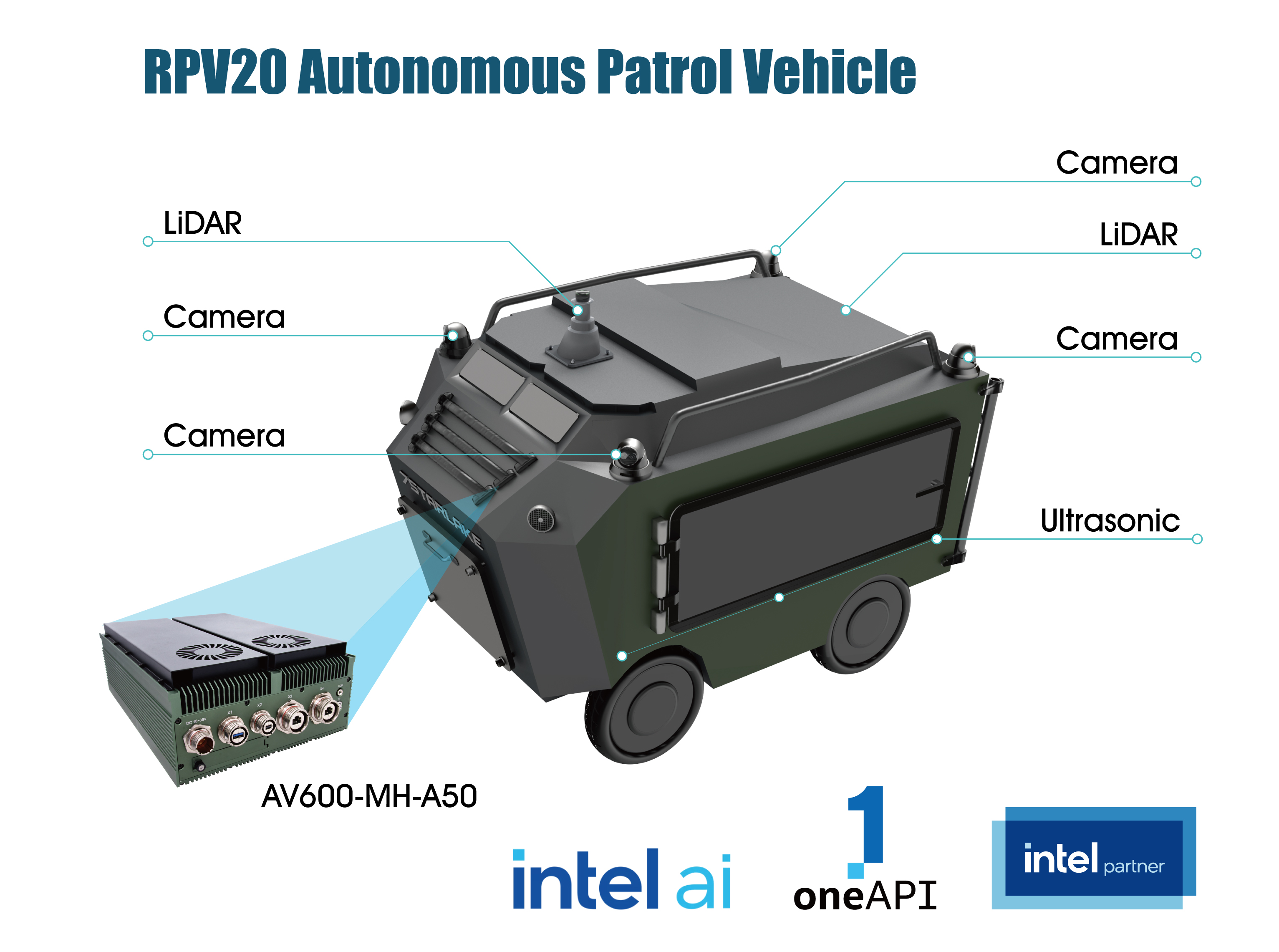
The RPV20 integrates a robust sensor array engineered for security, reconnaissance, and all-weather patrol missions. These sensors enable real-time detection of intruders, vehicles, drones at low altitude, suspicious activity, or breaches in restricted zones:
- Advanced Sensor Fusion and AI Perception for Threat Detection
-
Military and high-security environments demand rapid detection of irregular activity, and the RPV20’s AI-driven perception engine is designed for exactly this purpose. Through multimodal fusion, the RPV20 synthesizes camera imagery, LiDAR geometry, RADAR returns, and IMU data into a unified threat awareness model.

- Intel-Powered Computing for Real-Time Autonomy
-
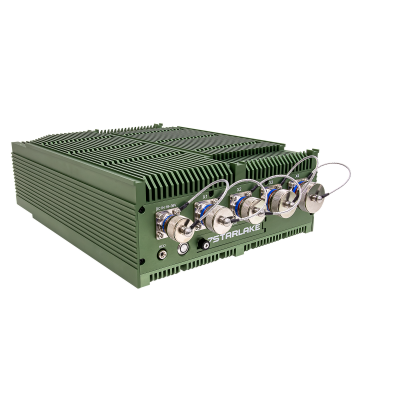
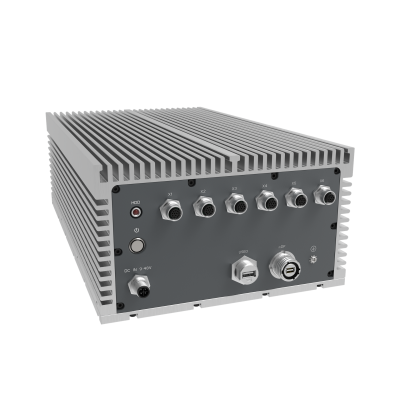
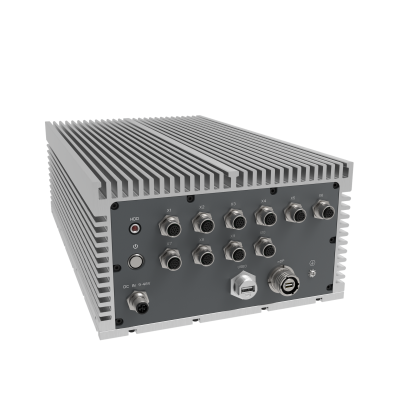
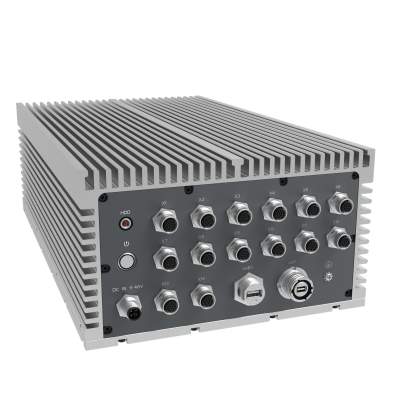
At the core of modern Autonomous Robotic Patrol Vehicles is a high-performance compute stack such as the 7STARLAKE AV600-MH-A50, a military-grade IP65 GPU computer designed for harsh environments, temperature extremes, and continuous high-load operation. Powered by Intel® Core™ Ultra processors with integrated Intel® Arc™ graphics, the AV600-MH-A50 enables efficient execution of AI-driven workloads, including deep learning models, sensor fusion tasks, path planning, and safety checks simultaneously.
Intel’s oneAPI software stack plays a critical role by enabling cross-architecture acceleration: CNN preprocessing tasks run on GPUs, while point cloud registration and geometric computations run efficiently on CPUs. With unified memory and SYCL-based programming models, oneAPI reduces manual optimization and ensures consistent performance across perception and decision-making pipelines.
- Cross-architecture acceleration: CPU for LiDAR/point cloud tasks; GPU for CNN image processing
- oneDNN + oneDAL: Speeds up neural inference, clustering, anomaly detection
- Unified memory: Enables fast sharing of RGB frames and LiDAR point clouds
- SYCL execution graphs: Ensure low-latency perception and response cycles
This architecture provides the computational reliability required for military patrol missions, autonomous ground surveillance, and real-time threat analytics at the tactical edge.
- Use Cases Across Industrial and Commercial Environments
-
Automated Guided Vehicles (AGVs) are already redefining operations across several sectors. In golf clubs and hospital campuses, AGVs provide guided mobility, equipment transport, nighttime patrol, and emergency video relay. In factories and warehouses, they support material movement, inventory inspection, intrusion detection, and automated incident response. Their ability to operate 24/7 with minimal supervision reduces operational expenses while enhancing both security and efficiency. As the technology matures, AGVs are expected to integrate seamlessly with facility management systems and security control centers, becoming central nodes in intelligent infrastructure ecosystems.
- Autonomous Patrol Vehicles: a Core Layer of Future Defense
-
The next wave of growth in AGVs will be driven by AI model improvements, edge computing advancements, and increasingly modular sensor platforms. Facilities seeking scalable automation will rely heavily on fully autonomous patrol systems that provide predictable performance, resilient situational awareness, and highly integrated security workflows.
As militaries accelerate modernization under multi-domain frameworks, unmanned autonomous ground platforms such as the RPV20 will serve as foundational assets. Their ability to provide persistent surveillance, unmanned risk exposure, and fully autonomous perimeter control aligns with global defense priorities. The synergy of Level-5 autonomy, ruggedized Intel-powered computing, and advanced sensor fusion positions the RPV20 as a next-generation system capable of reshaping base security, battlefield situational awareness, and industrial protection. s are positioned to become indispensable across logistics hubs, large campuses, and industrial operations worldwide.