- Introduction
-
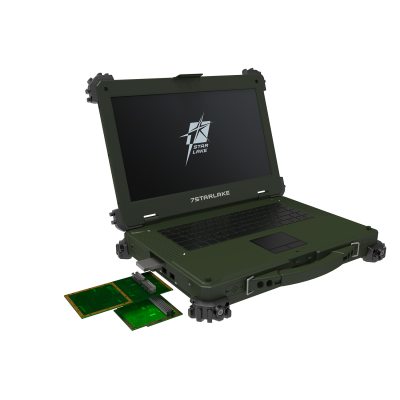
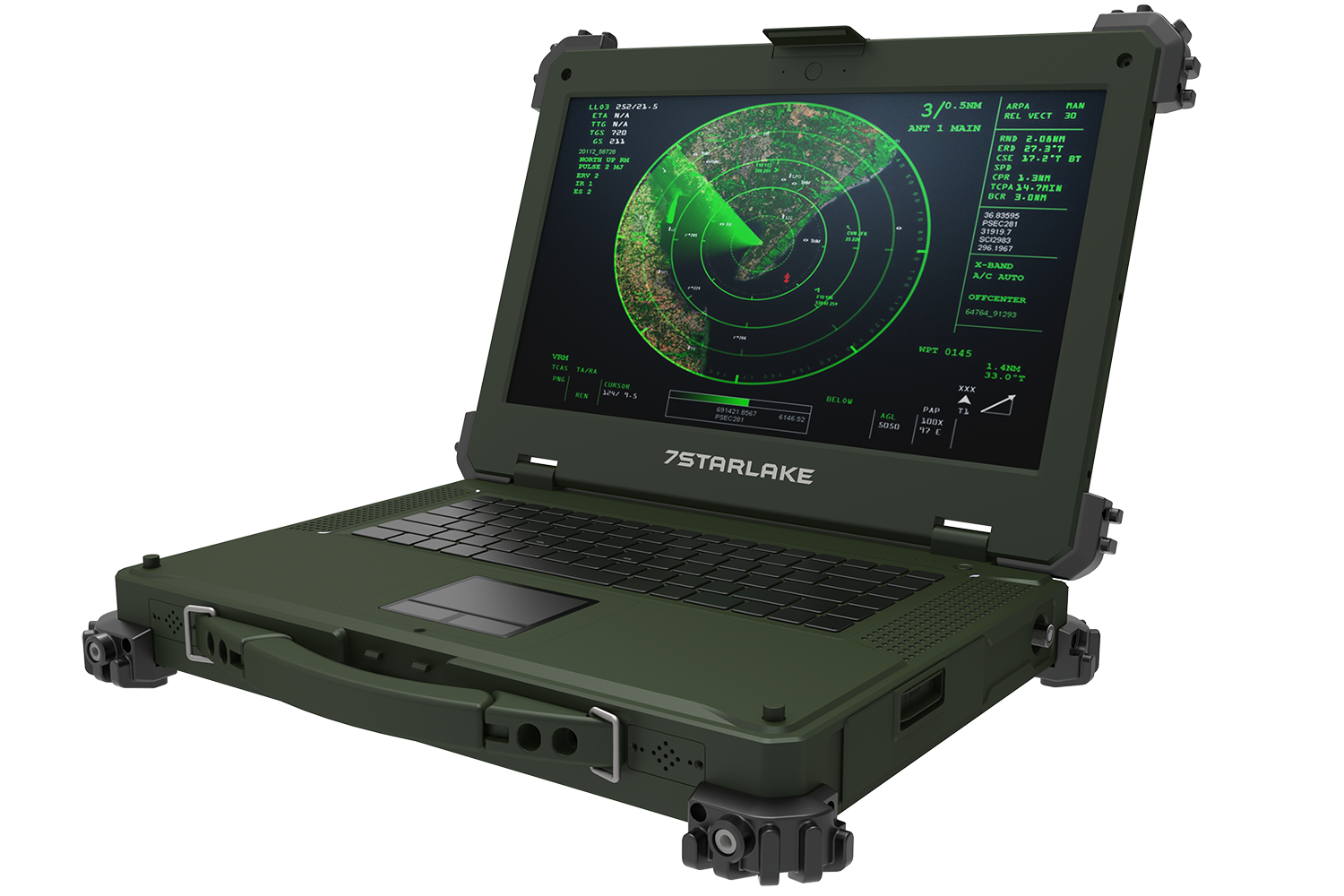
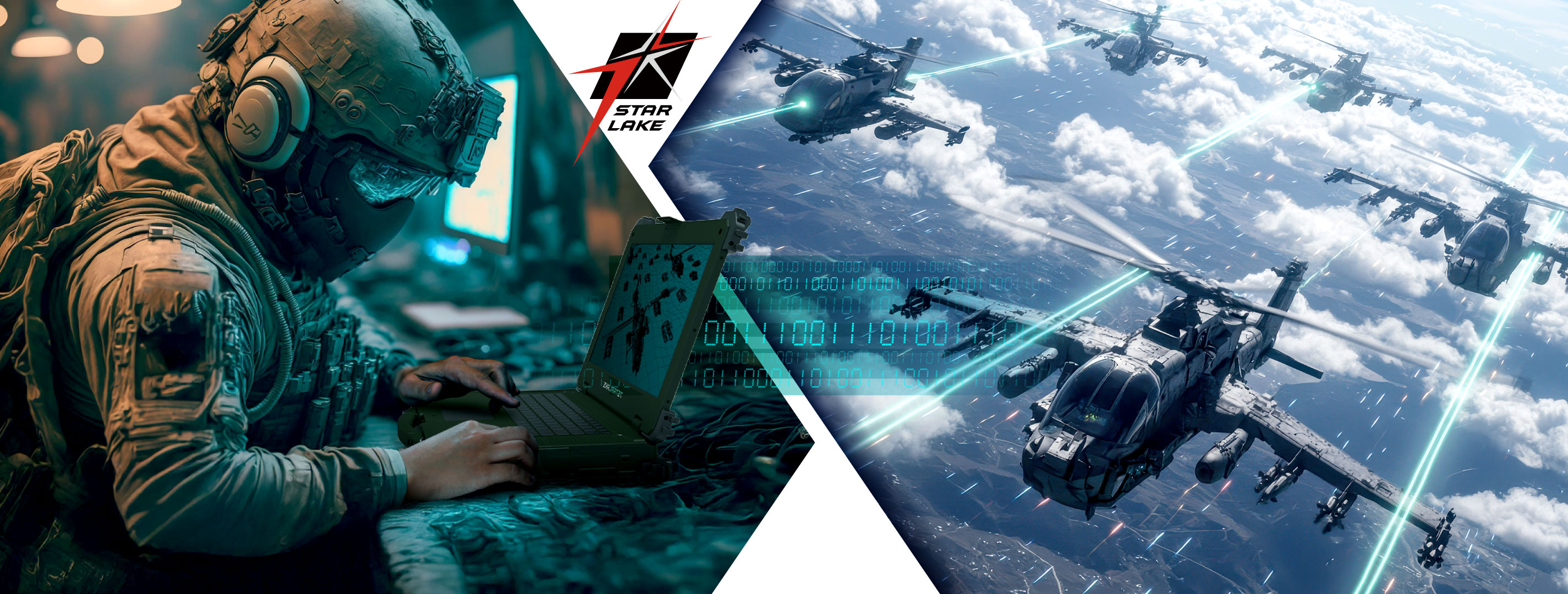
A GPU- and FPGA-powered Military Laptop acts as a high-performance, portable computing node for modern battlefield operations. By combining CPU, GPU, FPGA, and SFP technologies, it delivers the processing power required for advanced applications such as anti-drone defense, tactical networking, C4ISR, spectrum analysis and electronic warfare (EW), where low latency and uninterrupted performance can directly impact mission success.
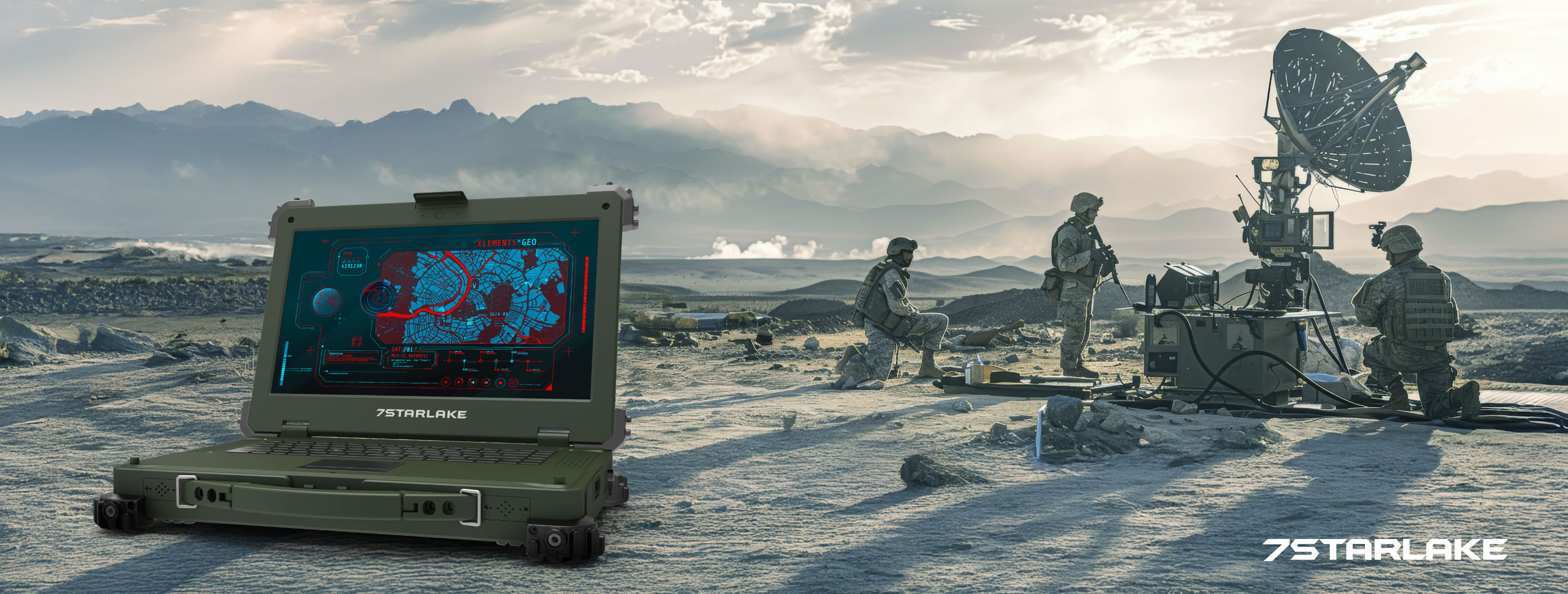
Compared to stationary rugged servers, military laptops deliver clear advantages in mobility, flexibility, and battlefield responsiveness. Their portability makes them ideal for field agents, dismounted soldiers, and mobile command units operating in dynamic or austere environments. By eliminating the need for bulky infrastructure, these laptops allow teams to plug in anywhere and rapidly relocate or redeploy without the logistical challenges of transporting and setting up heavy servers.
Beyond mobility, GPU- and FPGA-powered laptops dramatically simplify deployment, eliminating the need for rack mounting, extra cooling, or external power sources. More importantly, they provide high-performance local computing at the tactical edge, enabling real-time data processing without dependence on communications infrastructure or remote data centers.
- Benefits of Military Laptops in Modern Battlefields
-
GPU and FPGA-powered military laptops offer a powerful and portable edge computing solution tailored for dynamic battlefield environments. The table below highlights five key capabilities that distinguish these systems, enabling rapid deployment, real-time data processing, and operational flexibility across land, sea, air, and cyber domains.
Capability
Strength
Impact

Mobility and Portability
Compact, lightweight, battery-powered;
ideal for fast-moving field units or dismounted operations.
Enables instant deployment without reliance on external power or setup.

Rapid Deployment and Setup
Boot-and-go functionality ;
no need rack mounting, cabling, or extra cooling.
Critical for time-sensitive missions like anti-drone responses or mobile C4ISR operations.

Self-Contained Computing Power
High-performance CPU, GPU & FPGA in one unit.
Delivers server-grade power in mobile form.
Supports real-time analytics, AI workloads, spectrum analysis, and tactical signal processing at the edge.

Field Versatility
Usable in hand, on vehicles, or at forward-deployed outposts.
Adapts to land, sea, air, and cyber operations with flexible deployment options.

Lower Power Consumption
Engineered to operate on battery or low-power sources.
Ideal for austere environments with limited access to generators or power infrastructure.
- Field Applications with GPU & FPGA Military Laptops
-
Military laptops have evolved into powerful, portable computing hubs that support diverse operations across all battlefield domains, empowering a wide range of tactical operations by delivering high-performance computing at the edge. From anti-drone systems and tactical networks to C4ISR support and spectrum analysis, these portable laptops enable real-time decision-making in dynamic environments. Their versatility extends to electronic warfare, battlefield AI, signal intelligence (SIGINT), and mission planning, making them indispensable assets across land, sea, air, and cyber domains. Here are some of the modern applications where rugged GPU & FPGA-powered laptops make a strategic impact:
Application Anti-Drone Systems C4ISR Operations SIGINT/ELINT Processing Purpose and Capabilities RF sensing, radar analysis, EO/IR tracking, jamming, and electronic warfare control for neutralizing hostile drones Command & control, intelligence processing, and multi-domain coordination in real time. Signal interception, demodulation, and real-time spectrum analysis using FPGA/GPU acceleration. Application Tactical Networking UGV & UAV Console Battlefield AI & Edge Inference Purpose and Capabilities Mobile communication node for data routing, encryption, and network management in disconnected environments. Command and control interface, sensor feed visualization, flight control, object detection, system diagnostics, live ISR processing, and edge computing. On-the-spot object detection, facial recognition, threat classification, and predictive modeling. Application Geospatial Intelligence (GEOINT) Cybersecurity Operations Mission Planning and Rehearsal Purpose and Capabilities Terrain mapping, 3D rendering, route optimization, and satellite/drone imagery processing. Intrusion detection, local threat analysis, and cryptographic processes without cloud dependence. VR/AR simulation, command brief generation, and pre-mission data coordination. Application Vehicle and Platform Diagnostics Tactical Weather Forecasting Medical Field Support Purpose and Capabilities Interface with armored vehicles, aircraft, or naval systems for health monitoring and maintenance tasks. Deploy localized meteorological modeling for aviation, artillery, and troop movement decisions. Digital triage tools, casualty tracking systems, and secure patient data management during combat scenarios.
- Tactical Edge Computing: Integrated CPU, GPU, FPGA, and SFP Architecture
-
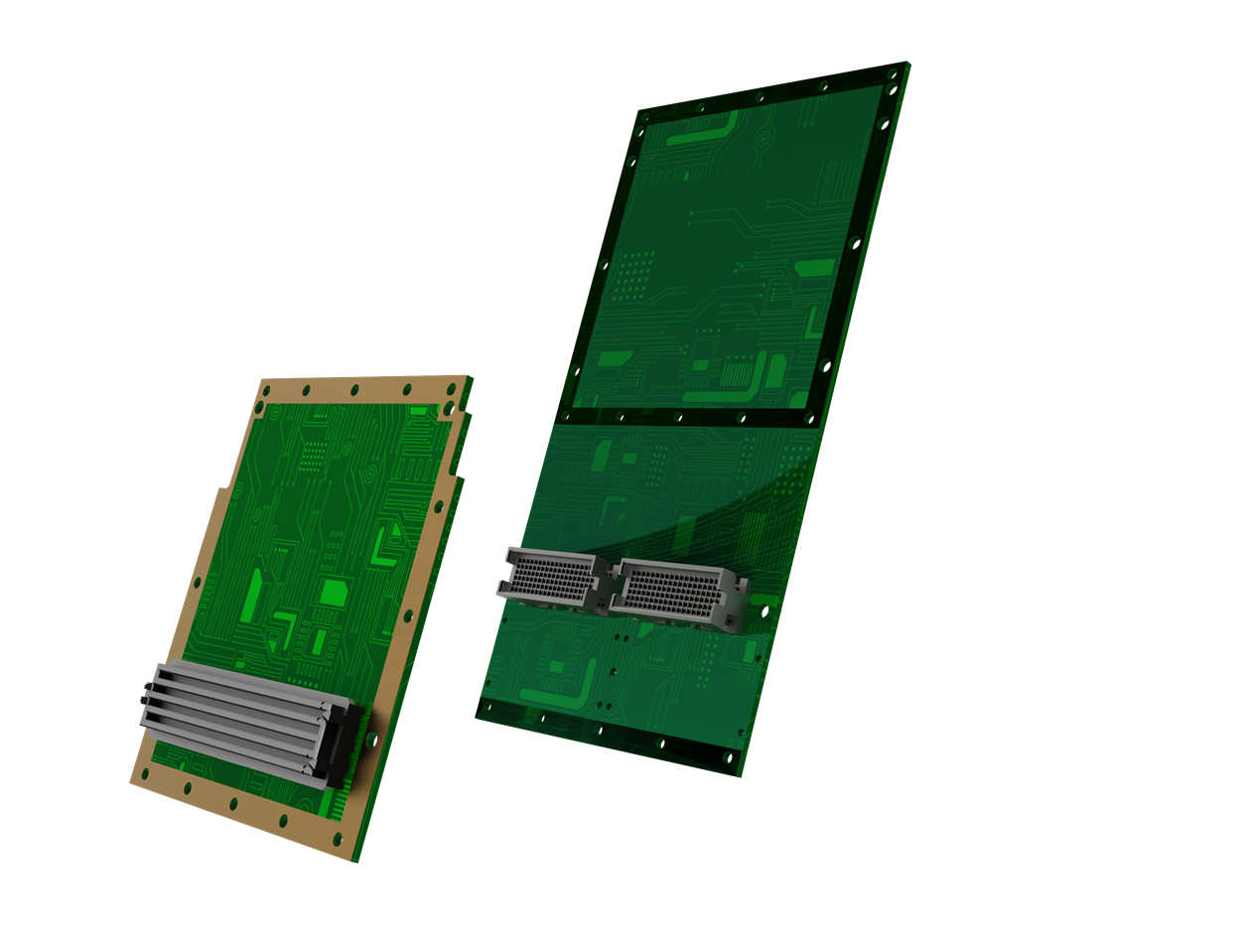
Rugged military laptops combine CPUs, GPUs, FPGAs, and SFP connectivity to deliver high-performance computing at the tactical edge. CPUs handle system orchestration and multithreaded data workloads, GPUs accelerate AI-driven tasks like object detection and real-time imaging, and FPGAs offer ultra-low-latency signal processing for RF demodulation and electronic warfare functions. Complementing this processing power, integrated 10G SFP modules provide high-speed, low-latency data links for interfacing with external sensors, ISR payloads, unmanned platforms, and tactical communication networks. SFPs enable flexible, rugged fiber or copper connectivity—critical for streaming large volumes of telemetry, RF, or video data in real time and under extreme conditions.
Together, these components form a highly adaptive, self-contained computing platform, engineered to support high-stakes missions. Below is an overview of each component’s role and potential hardware configurations:

CPU Task
GPU Task
FPGA Task
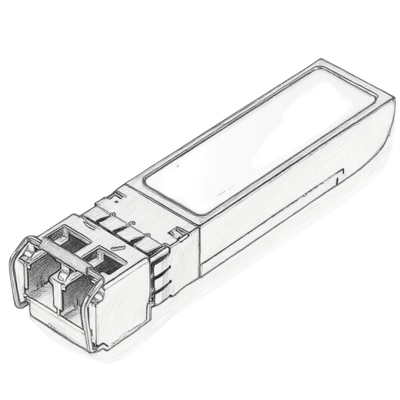
SFP Task
Key Role C2 logic, routing, sensor fusion AI acceleration, vision & signal tasks SDR, real-time signal processing, low latency RF signal processing High-speed, secure battlefield connectivity Anti-Drone System
System logic, C2 (Command & Control)
Object Detection, Object Tracking
RF Demodulation, Jamming
High-speed sensor data transfer.
Tactical Network
Routing, Encryption
AI-based Routing, Crypto
SDR waveform handling
Secure high-bandwidth network link.
C4ISR
Sensor fusion logic
ISR data analytics (electro-optical, infrared, RF spectrum)
Sensor data preprocessing
Real-time ISR data exchange.
Spectrum Analysis
Signal management
Signal classification
RF digitization, FFT (Fast Fourier Transform)
Fast RF signal transmission.
UGV Console
Command interface control
Real-time video processing
Sensor signal decoding
Low-latency vehicle data link
UAV Console
Flight mission control
ISR video analytics
RF link processing
High-speed aerial data link.
Key Advantages of GPU/FPGA in Battlefield Laptops
Real-Time Processing

GPUs/FPGAs enable low-latency AI and signal processing at the edge.
SWaP-C Efficiency

Better than bulky servers for mobile, battery-powered ops.
Adaptability

FPGA configurability allows mission-specific optimizations.
Cyber Resilience

Hardware-accelerated encryption (FPGA) prevents jamming/spoofing.
Key Advantages of 10G SFP in Battlefield Laptops
Fast & Stable

Low-latency, high-bandwidth communication for real-time operations.
Edge Decision-Making

Supports immediate analysis and faster command responses.
Scalable

Flexible SFP modules for future upgrades and evolving standards.
Interference-Resistant

Minimizes electromagnetic interference for reliable connections.
-
- 7STARLAKE Military Laptop X7-P8 in Field Operations
-
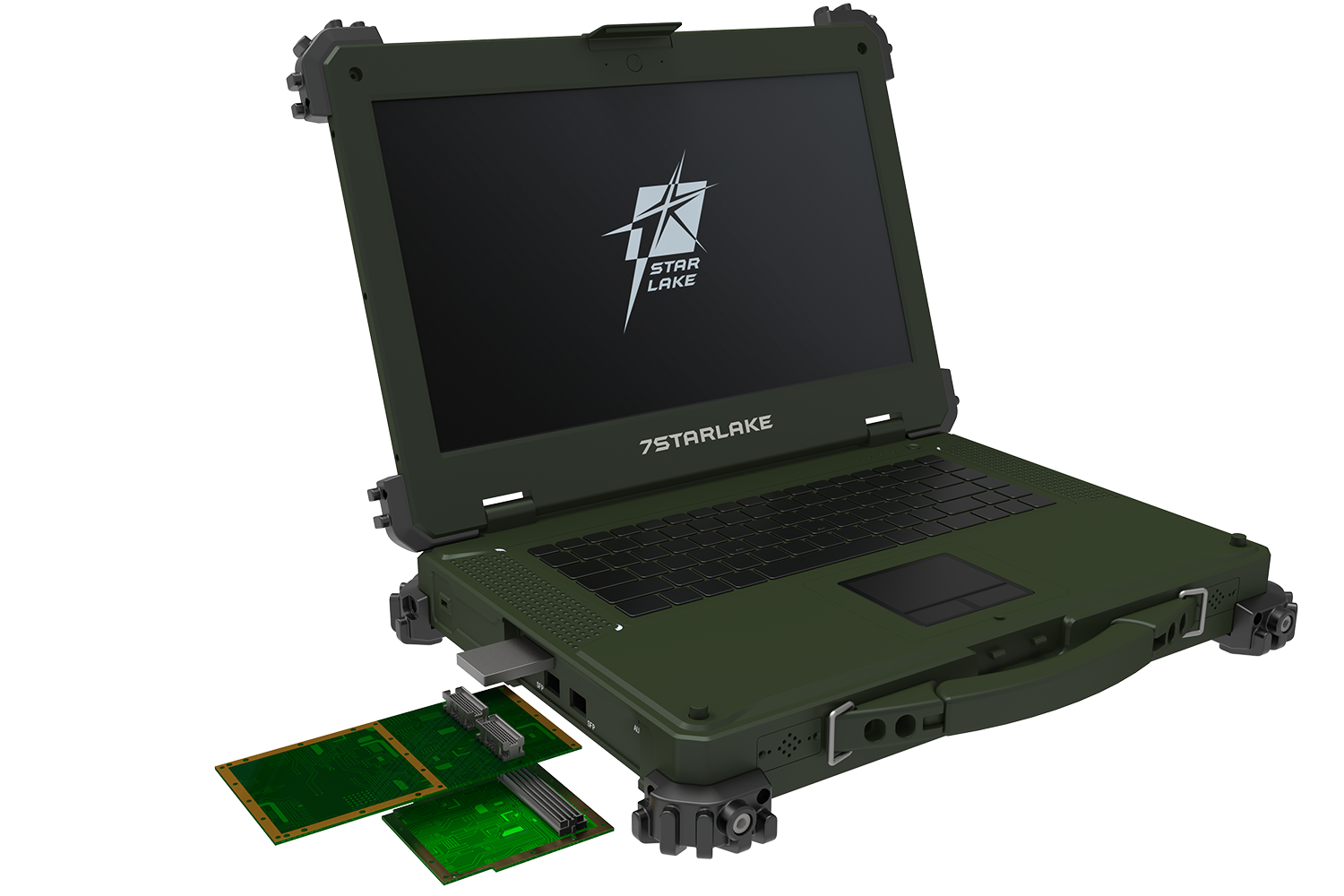
- Intel® Xeon® D-1848TER (10C/20T)
- Nvidia Quadro Ada 5000 (9728 CUDA)
- FHD 1000 Nits Sunlight Readable Multi-touch Screen
- FMC Slots – FPGA Based Capability
- 4 Channel 3G-SDI, Multi-Video Data Input
- 2 x PoE Ports, Tactical Camera Support
- Military DTL-38999 Connectors
- Extended Temperature -20°C ~+55°C
- IP65/MIL-STD-810/461 Standards
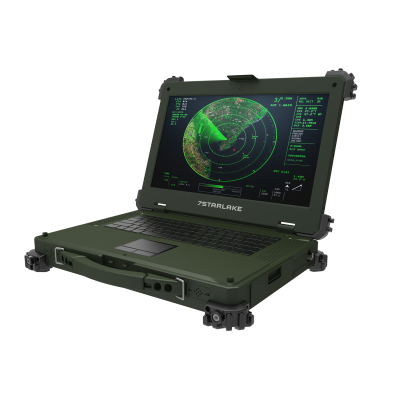
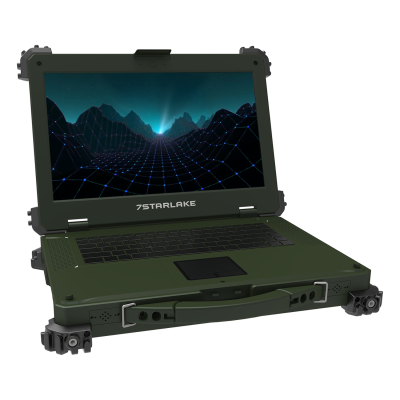
7STARLAKE’s 15.6” GPU & FPGA-Powered Military Laptop X7-P8 is a rugged, mission-ready platform engineered to meet the high-performance computing demands of modern battlefield operations. Powered by an Intel® Xeon® D processor, NVIDIA Quadro Ada 5000 GPU, and FPGA support via FMC slots, the X7-P8 excels at handling highly complex tasks, including anti-drone defense, tactical networking, C4ISR, spectrum analysis, and unmanned system control. Its four-channel 3G-SDI input and dual PoE ports allow seamless integration with tactical cameras and multiple video sources, providing operators with real-time video analysis, advanced field surveillance, and rapid data processing capabilities. Designed for both mobility and performance, the X7-P8 ensures that critical mission data is processed and actionable decisions can be made directly at the edge.
- Key Applications of 7STARLAKE Military Laptop X7-Pro
-
1. Anti-Drone Systems (Detection and Tracking)
Objective: Detect, track, and neutralize hostile drones using RF sensing, radar, EO/IR cameras, and electronic warfare (EW).
CPU - Runs real-time OS (Linux RT or Windows IoT)
- Manages sensor fusion (combining radar, RF, and optical inputs)
- Handles command & control (C2) software for drone jamming
GPU - AI-based drone detection (YOLOv7, TensorRT)
- Real-time video feeds (OpenCV, CUDA-accelerated)
- Runs deep learning models for RF fingerprinting (identifying drone commun,)
FPGA - Low-latency signal processing (FFT for radar/RF analysis)
- High-speed jamming waveform generation (SDR-based EW)
- Hardware-accelerated encryption for secure counter-drone comms
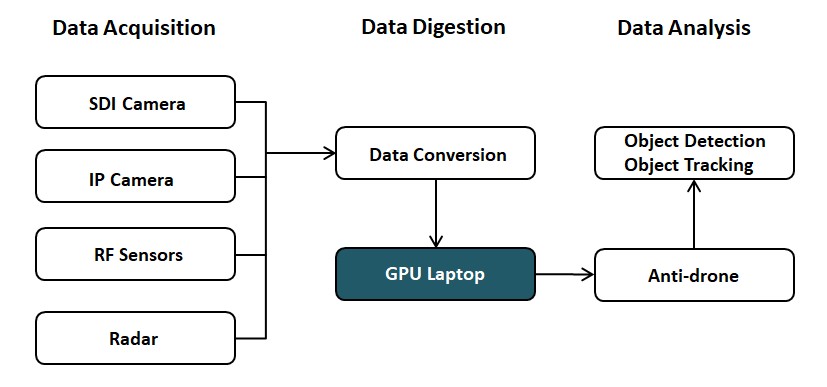
Sensor Types - Radar (X-band, Ku-band) – drone detection
- RF Sensors (Direction-finding antennas, SDR) – RF comms interception
- EO/IR Cameras (SDI/HDMI) – visual tracking
- IP Cameras (GigE or RTSP) – perimeter video monitoring
Data Conversion Modules (DCM) - Video Frame Grabbers
- SDR RF Front-End (e.g., Ettus USRP, AD9361)
- Radar IF Digitizers (FPGA-based ADC to PCIe)
- Sensor Fusion Middleware
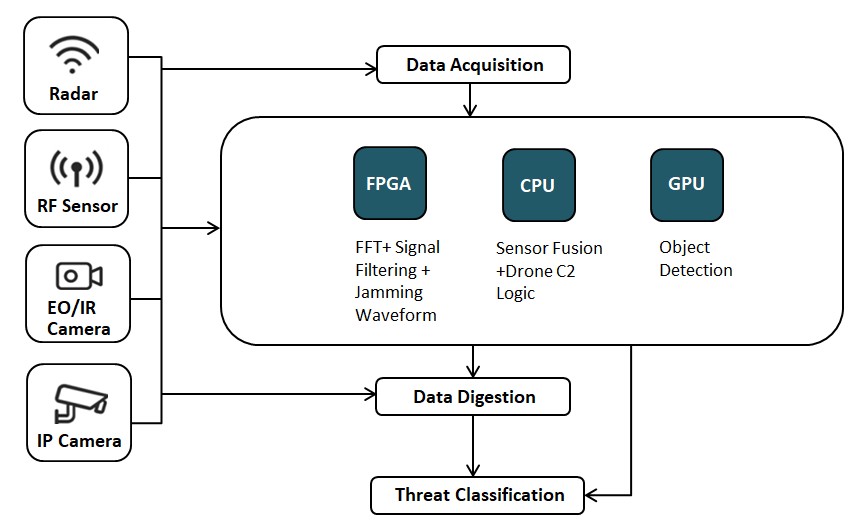
2. Tactical Networking (MANET – Mobile Ad Hoc Network, e.g., MPU5; SDR; Encrypted Communications)
Objective: Maintain secure, ad-hoc battlefield networks using software-defined radio (SDR), mesh networking, and encrypted communications. Ensure robust, secure communications in a dynamic combat network.
CPU - Runs tactical networking protocols (e.g., OLSR, Optimized Link State Routing for MANET)
- Manages SDR stack (GNU Radio, REDHAWK)
- Handles VPN & encryption IPSec, AES-NI acceleration (Intel Advanced Encryption Standard New Instructions)
GPU - Accelerates RF signal processing (beam forming, modulation/demodulation)
- Optimizes AI-based traffic analysis (anomaly detection in network traffic)
FPGA - Real-time SDR processing (Supports advanced modulation schemes)
- DSSS (Direct Sequence Spread Spectrum)
- FHSS (Frequency Hopping Spread Spectrum)
- Ultra-low-latency encryption/decryption (TEMPEST security)
- Adaptive beam forming for directional communications in contested environments
Sensor Types - SDR Radios (LPI/LPD capable)
- GPS/GNSS Receivers RF Spectrum
- Monitors Environmental Sensors (optional for network-aware routing)
Data Conversion Modules - SDR PCIe Interface Cards
- Gigabit Ethernet Adapters
- Time-Sync Modules (PTP, PPS)
Data Flow Data Acquisition:
- RF signals received via SDR front-end
- Positioning/time data from GPS modules
Data Digestion:
- FPGA: Modulation/demodulation e.g., QPSK (Quadrature Phase Shift Keying), FHSS
- CPU: Routing (OLSR), VPN stack, encryption via AES-NI
- GPU: Traffic pattern learning, beamforming optimization
Data Analysis:
- CPU: Network resilience prediction, routing decisions
- GPU: Anomaly detection in traffic (AI/ML)
3. C4ISR (Command, Control, Intelligence, Surveillance, Reconnaissance)
Objective: Enable real-time situational awareness via satellite feeds, drone ISR, using multi-intelligence data
CPU - Runs GIS/mapping software (ArcGIS, Falcon-View)
- Handles multi-int fusion (combining SIGINT, ELINT, IMINT imagery intelligence)
- Manages mission planning & decision support tools
GPU - Accelerates AI-based image recognition (SAR synthetic aperture radar, hyper-spectral imaging)
- Processes real-time video analytics (object detection, change detection)
- Runs neural networks for predictive battlefield analysis
FPGA - High-speed sensor data ingestion (LiDAR, SAR, EO/IR)
- Hardware-accelerated compression (H.265 for drone feeds)
- Edge AI for SWaP-C ISR
Sensor Types - EO/IR Sensors (SDI/USB)
- SAR/LiDAR Systems (PCIe or USB3)
- ELINT/SIGINT Antennas
- UAV Drone Feeds: IP, RTSP (Real-Time Streaming Protocol), satellite uplink
Data Conversion Modules - High-speed Frame Grabbers (for EO/IR)
- LiDAR-to-USB/PCIe Interface
- Satellite Modem or IP Decoder Box
- H.265 Hardware Decoders
Data Flow Data Acquisition:
- Imagery from EO/IR or satellite captured via video grabbers
- Signal intercepts via ELINT/SIGINT ADC chains
Data Digestion:
- FPGA: Real-time decompression & filtering
- CPU: Multi-INT fusion (SIGINT + imagery + positioning)
- GPU: AI-driven detection (person/vehicle, pattern-of-life)
Data Analysis:
- GPU/CPU: Change detection, decision support analytics
- CPU: Mission planning, C2 outputs
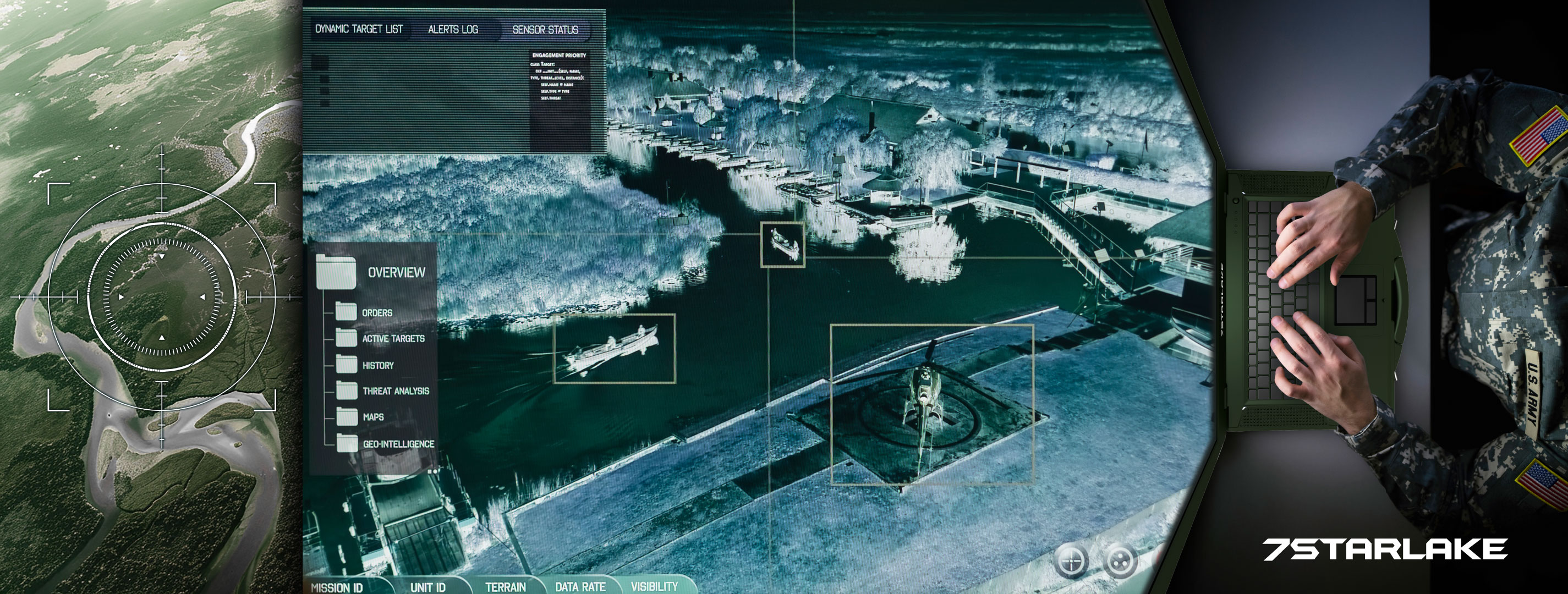
4. Spectrum Analysis (SIGINT, Electronic Warfare, RF Mapping)
Objective: Detect, classify, and geo-locate enemy signals (SIGINT) and perform electronic attack (EA) / electronic protection (EP)
CPU - Runs spectrum monitoring tools (HDSDR -High Definition Software Defined Radio), SIGINT software
- Manages geo-location algorithms - Time Difference of Arrival (TDOA) and Frequency Difference of Arrival (FDOA)
- Coordinates EW responses (jamming, deception)
GPU - Accelerates wideband FFT processing (CUDA-based spectrograms)
- Runs ML models for signal classification (CNN—Convolutional Neural Network for RF fingerprints)
- Optimizes real-time RF scene visualization
FPGA - Ultra-low-latency spectrum sensing for fast-hopping signals
- Real-time digital filtering & demodulation for COMINT (Communications Intelligence)/ELINT
- Jamming waveform synthesis: DRFM (Digital Radio Frequency Memory) for deception)
Sensor Types
- Wideband SDR (70 MHz–6 GHz)
- DF (Direction finding) Antennas (for geo-location)
- Radar Warning Receivers
- RF Detectors (for covert burst signal detection)
Data Conversion Modules - ADC/FPGA Chains (high-speed RF sampling)
- PCIe-based RF Digitizer Boards
- GPS/Time Sync Modules (for TDOA/FDOA)
Data Flow Data Acquisition:
- RF signals digitized via high-speed ADCs
- Wideband sweeps captured in SDR buffers
Data Digestion:
- FPGA: FFT, demodulation, protocol decoding
- GPU: Real-time spectrogram rendering, AI signal classifiers
- CPU: Geo-location via multilateration, database matching
Data Analysis:
- GPU: Threat signal classification (e.g., radar modes, LPI (Low-probability-of-intercept radar) signals
- CPU: EW orchestration (jam/deceive decisions)
5. UAV Console
Objective: Enable flight control, ISR (Intelligence, Surveillance, Reconnaissance) data handling, and real-time edge processing for unmanned aerial operations.
CPU - Executes flight control software and autopilot logic
- Handles communication protocols and telemetry links
- Manages mission planning and system diagnostics
GPU - Accelerates real-time image and video analytics
- Supports object tracking, terrain recognition, and target ID
- Performs AI/ML inference for autonomous decisions
FPGA - Interfaces with avionics sensors and high-speed data streams
- Executes real-time signal preprocessing and sensor fusion
- Provides deterministic processing for time-critical feedback
Sensor Types - Radar: Ground-moving target indication (GMTI), weather
- LIDAR: Altitude and terrain mapping
- Visual: EO/IR cameras, gimballed RGB sensors
- IMU: Stabilization, orientation
- GPS: Navigation, geolocation
- Environmental: Wind, temperature, radiation detection
Data Conversion Modules - ADC/DAC boards: 12–16 bit resolution for analog sensor input
- SERDES: Multi-Gbps serial links for video and radar feeds
- CAN/RS-232 converters: Connect legacy avionics systems
- USB/Ethernet interfaces: Plug-and-play for modular upgrades
- Video Frame Grabbers: SDI/HDMI to USB 3.0 or PCIe for ISR feed capture
Data Flow Data Acquisition:
- FPGA: Captures raw input from EO/IR, IMU, and telemetry sensors
- CPU: Initializes sensors and handles protocol management
Data Digestion:
- FPGA: Filters, synchronizes, and aligns sensor data (e.g., video + IMU fusion)
- CPU: Manages routing and passes structured data to processing modules
- GPU: Prepares image streams for inference (e.g., resizing, normalization)
Data Analysis:
- GPU: Performs object detection, ISR interpretation, and visual SLAM
- CPU: Integrates results, supports decision-making, and displays insights
- FPGA: handles rapid-response actions like geofencing alerts or motor commands
- Conclusion
-
In modern defense operations, GPU- and FPGA-powered rugged laptops redefine what real-time visualization means on the battlefield. Whether analyzing the RF spectrum, monitoring UAV feeds, or executing spectrum dominance strategies, these systems provide warfighters with immediate clarity in complex signal and data environments. By fusing AI acceleration with ultra-low-latency signal processing, the laptop transforms into an edge-deployed command console, capable of interpreting threats, enabling secure communication, and driving mission execution without relying on remote infrastructure. This convergence of portability, resilience, and computational power ensures that soldiers maintain operational superiority, even under contested and unpredictable conditions.
Looking ahead, intelligent warfare across air, land, and sea is rapidly reshaping the character of conflict. Drones, autonomous vehicles, and unmanned naval systems are expanding the battlespace, demanding faster decision cycles and resilient edge computing. The integration of CPU, GPU, and FPGA architectures enables rugged laptops to coordinate UAV swarms, analyze electronic signatures from maritime platforms, or guide unmanned ground assets with real-time precision. GPUs accelerate AI-driven vision and analytics, while FPGAs provide instantaneous RF and spectrum warfare capabilities across all domains. Together, they create a ruggedized AI hub that empowers operators with superior situational awareness and adaptive control, ensuring that information dominance, speed, and autonomy translate directly into decisive advantage in multi-domain operation.
Download the whitepaper [Here]