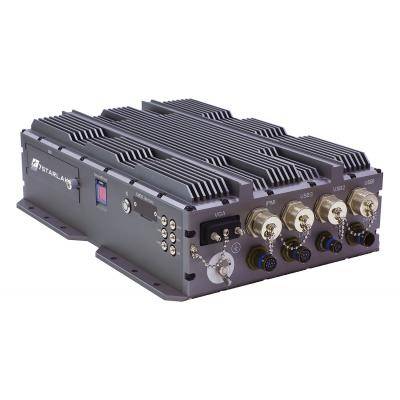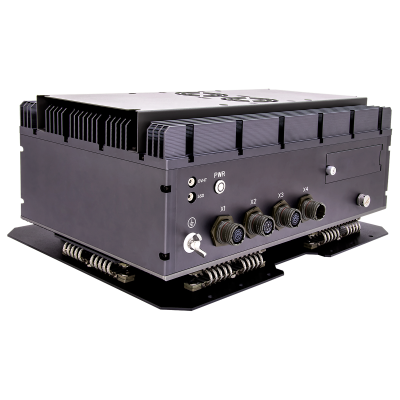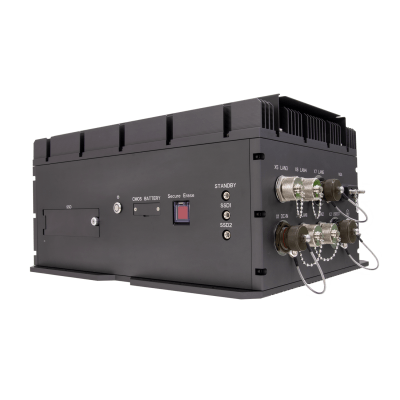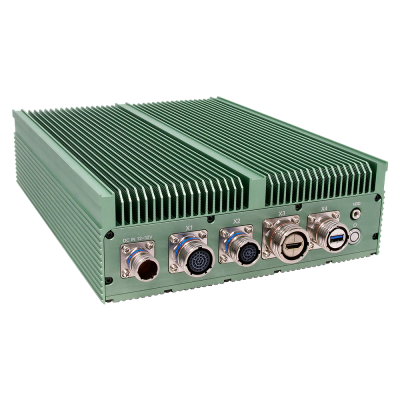
AVA800-L4
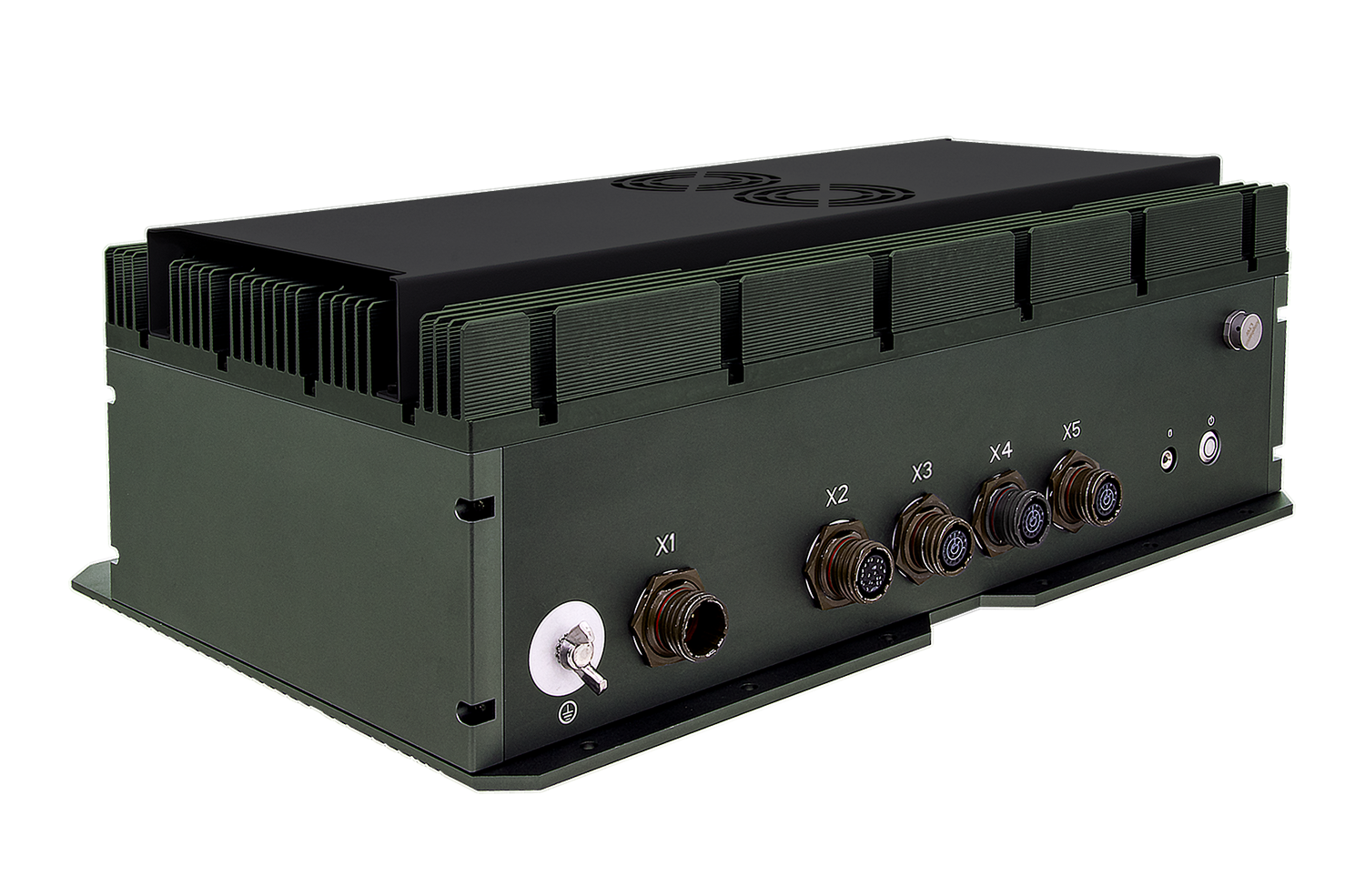
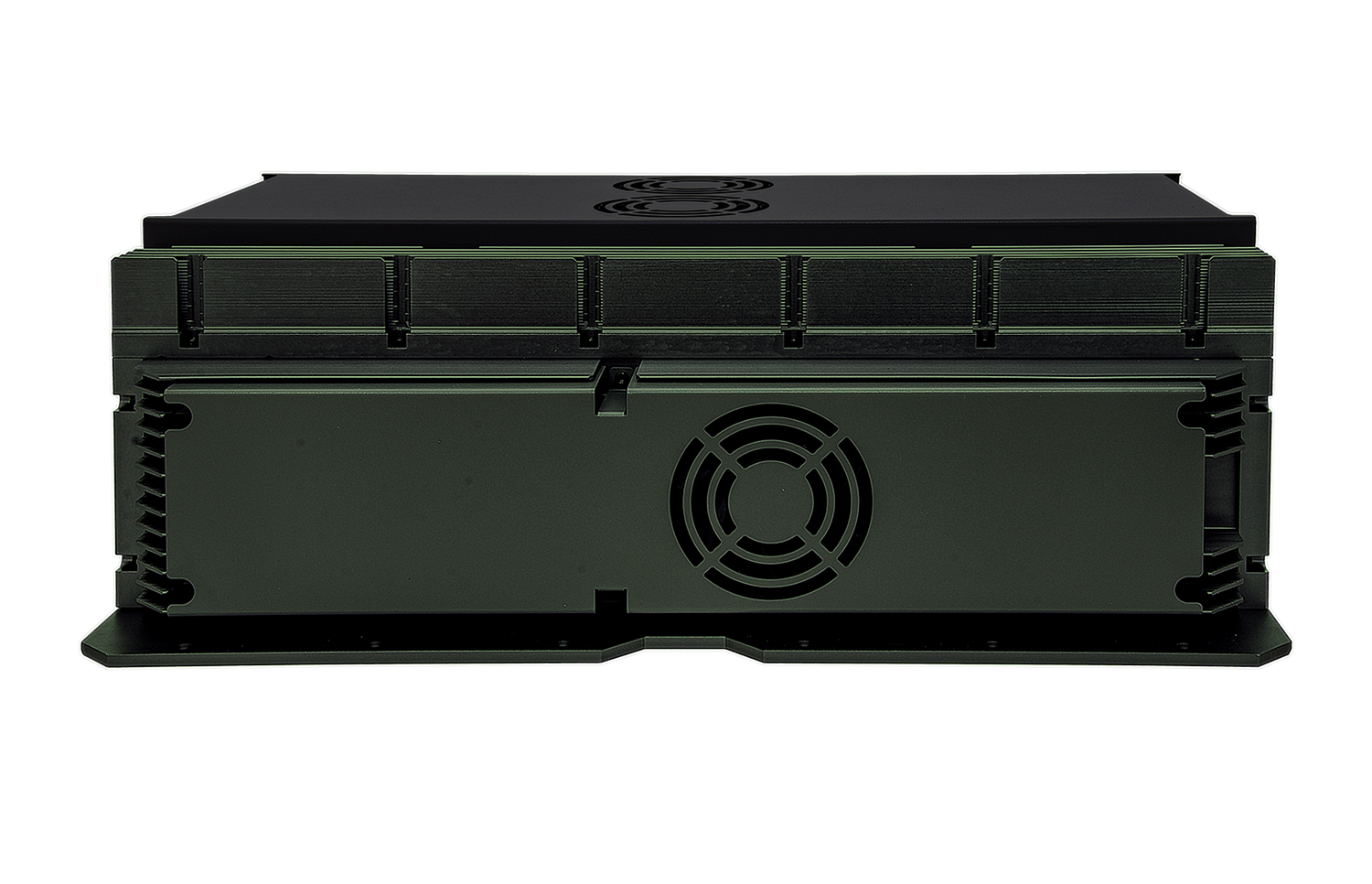
AVA800-L4
Rugged GPU Server Powered by AMD EPYC 8434P and NVIDIA L4
- Ultra-High-Performance AMD® EPYC® 8434P (2.5GHz, Max 3.1GHz 48 cores, 96 threads TDP 200W)
- NVIDIA Ada Lovelace L4 Tensor Core GPU Integrated (7424 CUDA and 30.3 TFLOPS, 24GB GDDR6)
- 256GB RDIMM ECC DDR5-4800 MHz
- 2 x 2TB U.2 NVMe for Fast & Mass Storage with SED
- Designed to meet MIL-STD-810/ 461
- Trusted Platform Module (TPM) 2.0 support (AOM-TPM-9672V)
- Technical Profile
- Specifications
- Rugged Edge AI Platform Powered by AMD EPYC & NVIDIA L4
-
The AVA800-L4 is a ruggedized AI inference platform designed for advanced inference workloads such as voice, video, image, and recommendation services. Powered by the AMD 4th Generation EPYC™ Siena processor and the NVIDIA® Ada Lovelace L4 Tensor Core GPU, the platform delivers exceptional performance for real-time AI inference. The L4 GPU features 30.3 TFLOPS of FP32 and 485 TOPS of INT8 performance, leveraging a PCIe Gen 4 x16 high-speed interface to accelerate inference based on trained neural network models.

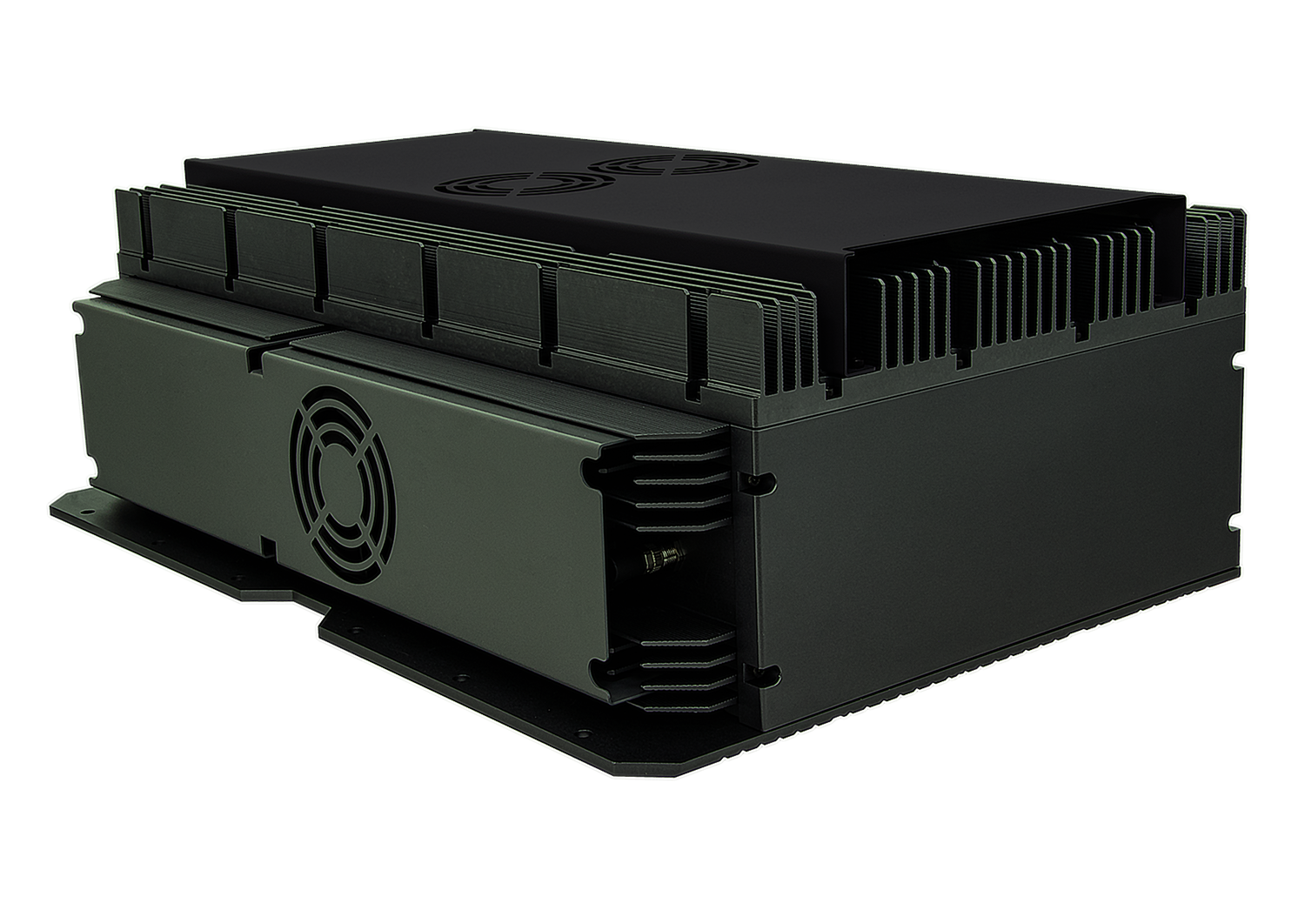
Utilizing 7STARLAKE's Open Modular, Scalable Architecture, the AVA800-L4 provides an optimized cooling solution for the Ada Lovelace L4 GPU, ensuring stable system operation in harsh environments. For high-speed data access and flexible storage expansion, the AVA800-L4 is equipped with dual U.2 NVMe slots.
This combination of high inference performance, a powerful CPU, and expansion capability makes the AVA800-L4 an ideal ruggedized platform for versatile edge AI applications. With Trusted Platform Module (TPM) 2.0 support, the ruggedized GPU server ensures data integrity and cybersecurity at the edge, making it an ideal server platform for next-generation defense operations.
- MIL-STD-810 / MIL-STD-461 Standards
-
The AVA800-L4 is a rugged Edge AI Inference server built to meet MIL-STD-810 and MIL-STD-461 standards, engineered to satisfy strict size, weight, and power (SWaP) requirements while withstanding harsh environments, including extreme temperatures, shock, vibration, sand, dust, and salt/fog. It passes comprehensive environmental and EMI/EMC tests, such as temperature, altitude, shock, vibration, voltage spikes, and electrostatic discharge. Its sealed, compact chassis provides robust protection for internal circuit cards against external elements like sand, dust, and humidity, ensuring long-term operational reliability in demanding industrial settings.


- Appearance

|
System |
|||
|---|---|---|---|
|
Processor |
AMD® EPYC® Siena Processor 8434P (Frequency 2.5GHz, Turbo Boost Frequency up to 3.1GHz), 48 Core, 96Thread Support, 128MB L3 Cache TDP 200W |
||
|
Memory type |
256GB RDIMM ECC DDR5 4800MHz |
||
|
Chipset |
SoC |
||
|
GPU |
|||
|
NVIDIA |
TESLA Ada Lovelace L4 Tensor Core GPU |
||
|
TFLOPS |
30.3 |
||
|
CUDA Cores |
7424 |
||
|
Memory |
24 GB GDDR6, 300 GB/sec |
||
|
Graphics Output |
|||
|
1 x VGA |
ASPEED AST 2600 |
||
|
Resolution |
Up to 1920x1200@60Hz 32bpp |
||
|
Storage |
|||
|
HDD/SSD |
2 x 2TB U.2 NVMe SSD with SED |
||
|
Side I/O |
|||
|
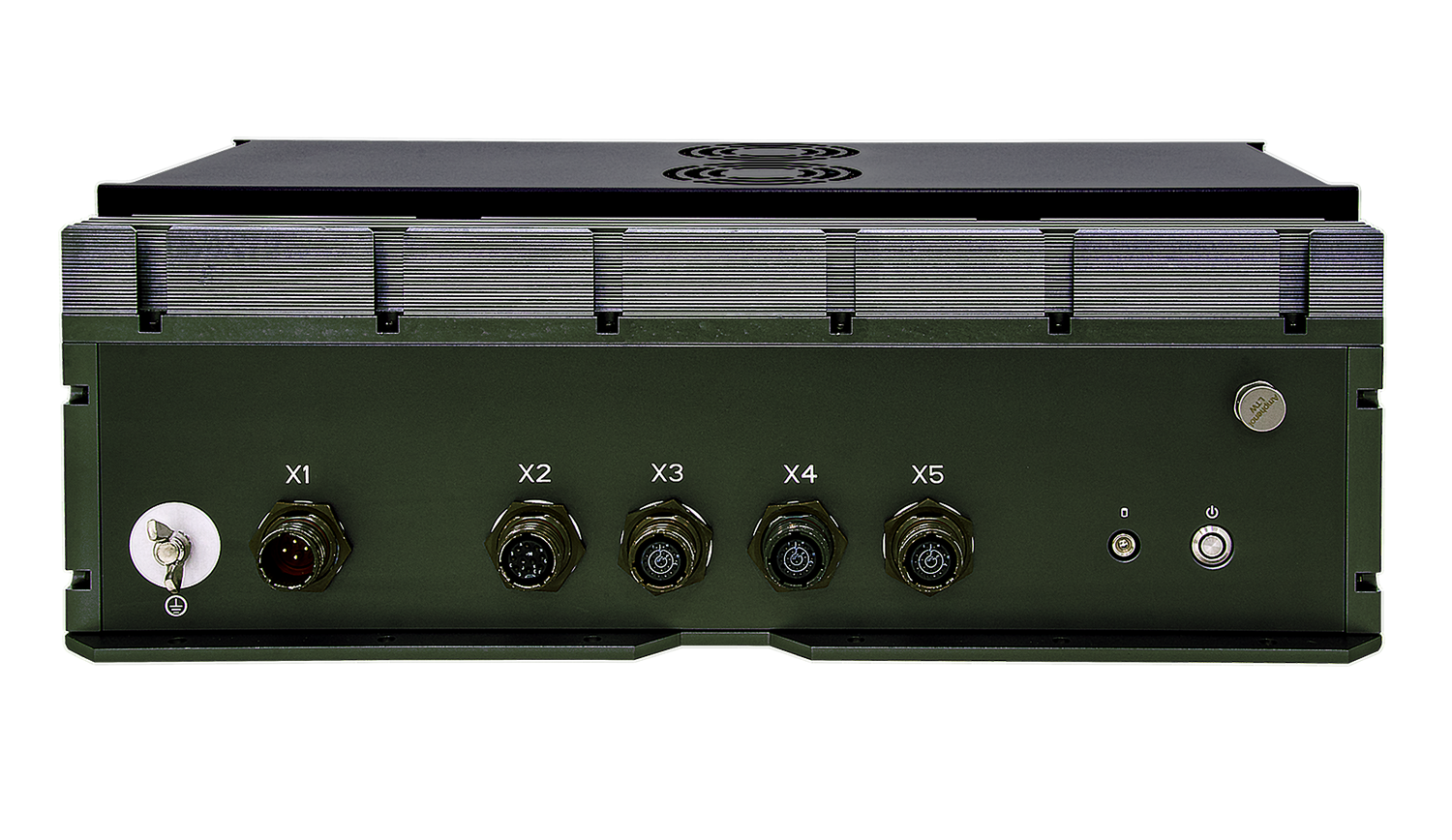
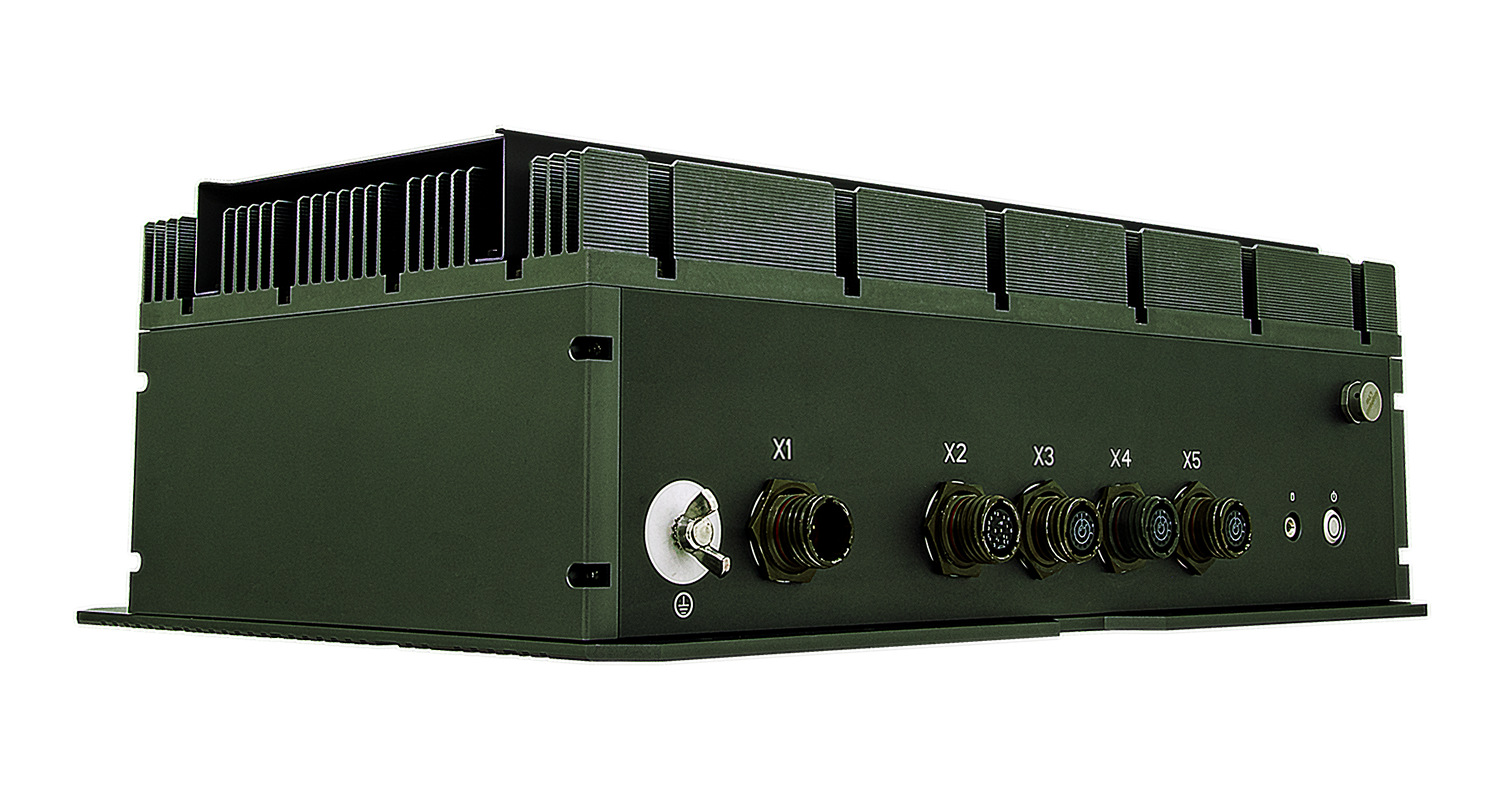
X1 |
1 x DC-IN with Amphenol TV07RW‐13‐04P (4PIN) connector |
||
|
X2 |
1 x VGA with Amphenol TV07RW‐13‐98S (10PIN) connector |
||
|
X3 |
2 x 1GbE with Amphenol TV07RW13-35SN (22PIN) connector |
||
|
X4 |
4 x USB2.0 with Amphenol TV07RW13-35SB (22PIN) connector |
||
|
X5 |
1x (1GbE+ IPMI) with Amphenol TV07RW13-35SN (22PIN) connector |
||
|
Dedicated LED |
2 x Red / Green LEDs ( SSD) |
||
|
Hardware |
Trusted Platform Module (TPM) 2.0 , Silicon Root Trust (RoT)-NIST 800-193 Compliant |
||
|
Features |
UEFI Secure Boot / Secure Firmware Updates |
||
|
Power Requirement |
|||
|
Power Input |
DC-DC 18 to 36V (300W max) MIL-STD 461 |
||
|
Applications, Operating System |
|||
|
Applications |
C4ISR, Commercial and Military Platforms Requiring Compliance to MIL-STD-810 Process Control, where Harsh Temperature, Shock, Vibration, Altitude, Dust and EMI Conditions |
||
|
OS Support List A |
Windows 10 64bit Enterprise, Windows 10 64bit Pro Workstations, Windows 10 IoT 64bit Enterprise, Windows 11 64bit Enterprise (OR001), Windows 11 64bit Pro Workstations (OR001), Windows 11 IoT 64bit Enterprise (OR001), Windows Server 2019 64bit, Windows Server 2022 64bit |
||
|
OS Support List B |
RHEL 8.5 64bit, RHEL 8.6 64bit, RHEL 9.0 64bit, RHEL 9.2 64bit, CentOS 8.5. 64bit, Oracle 8.5 64bit, Oracle 8.6 64bit, Rocky Linux 8.5 64bit, openSUSE Leap 15.4 64bit, SLES 15 SP3 64bit, Ubuntu 22.04 64bit Server, Ubuntu 21.10 64bit Server. |
||
|
VMware |
VMWare ESXi 7.0u3d x 64, VMWare ESXi 8.0 x 64 |
||
|
Physical |
|||
|
Dimension |
450 x 154 x 316 mm (D x H x W) |
||
|
Estimated Weight |
18Kg (39.68lbs) final weights is dependent on specific configuration |
||
|
Chassis |
Aluminum Alloy, Corrosion Resistant |
||
|
Finish |
Anodic Aluminum Oxide |
||
|
Cooling |
Conduction Cooling with Air Force Smart Fan Ingress Protection |
||
|
Ingress Protection |
IP65 |
||
|
MIL-STD 810 |
|||
|
High Temperature |
High Temperature Storage |
+74°C per MIL-STD-810G/501.5/I for 7 cycles |
|
|
High Temperature |
High Temperature Operation |
55°C per MIL-STD-810G/501.5/II for 3 cycles |
|
|
Low Temperature |
Low Temperature Storage |
-46°C for 72 hours per MIL-STD-810G/502.5/I |
|
|
Low Temperature |
Low Temperature Operation |
-33°C per MIL-STD-810G/502.5/II |
|
|
Vibration |
C-130(J/K) aircraft |
Test duration 400 minutes per axis (x,y,z), simulating 120 flight hours including 20 landings and takeoffs |
|
|
Functional Vibration |
Vibration experienced on Ford F-550 in neutral gear |
||
|
|
Tactical Transportation test Not Operational |
Test duration: 120 minutes per axis to simulate 500,000 km driving distance. |
|
|
Shock |
Road Transportation |
10 Grms, 11ms, 3 (X, Y, Z) axes, Sawtooth Pulse |
|
|
Immersion |
Method 502.5 |
Test according to IEC 60529/ IP65 |
|
|
MIL-STD 461 |
|||
|
Conducted Emissions |
CE102 |
10KHz to 10MHz (Figure CE102-1) |
|
|
Power Leads |
|||
|
Conducted Susceptibility |
CS101 |
30Hz to 150KHz (Figure CS101-1: Curve #2) |
|
|
Power Leads |
|||
|
Conducted Susceptibility, bulk cable injection |
CS114 |
10KHz to 200MHz, curves 3&4 (10 kHz to 2 MHz: Curve #3 2MHz to 200MHz: Curve #4)
|
|
|
Conducted Susceptibility, bulk cable injection |
CS115 |
Impulse excitation (5A) |
|
|
Conducted Susceptibility Damped sinusoidal transients, cables and power leads |
CS116 |
10KHz to 100MHz (10A) |
|
|
Radiated Emissions electric filed |
RE102 |
2MHz to 18GHz (Figure RE102-4) |
|
|
Radiated Susceptibility electric filed |
RS103 |
2Mhz to 18GHz, 50V/m (2MHz to 100MHz: 50V/m 100MHz to 18GHz: 50V/m) |
|
|
Personnel borne electrostatic discharge |
CS118 |
Personnel borne electrostatic discharge |
|